


Caravans
Electric trailer brakes use a 12-volt electrical signal sent from your towing vehicle to brake actuators mounted on the trailer's axles. When you apply the tow vehicle's brakes, a controller senses the deceleration and triggers the electromagnets that engage the trailer's brake shoes. This system responds instantly and proportionally to your braking input, giving you smooth, predictable stopping power.
The beauty of electric brakes lies in their simplicity and reliability. There are no fluid lines to leak, no hydraulic fluid to maintain, and no complex valve systems to troubleshoot. For modern vehicles and newer caravans on the Mornington Peninsula, electric brakes offer excellent precision and are easy to integrate with your towing vehicle's existing brake system.
However, electric brakes do require a functioning 12-volt charging circuit in your tow vehicle and proper wiring through a dedicated brake controller. If your vehicle's electrics fail or the connector corrodes, your trailer brakes won't engage, which is why regular electrical maintenance is essential.
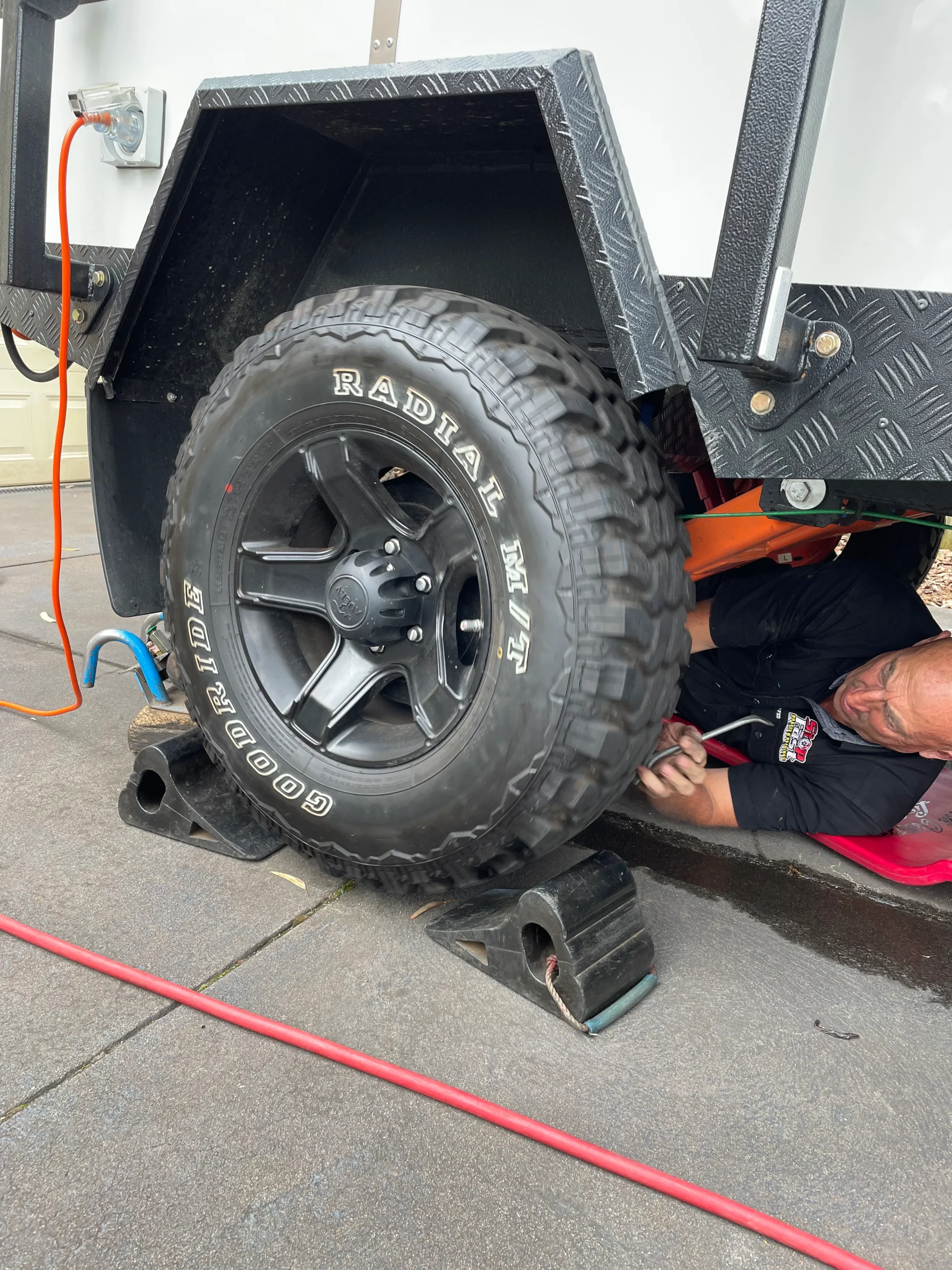
Hydraulic override brakes operate mechanically through hydraulic fluid pressure. They work by detecting when your towing vehicle decelerates and using that deceleration to activate the trailer's brakes independently. This 'overriding' action means your trailer brakes engage even if the tow vehicle's brakes aren't fully applied, which can actually improve overall stopping performance in certain situations.
For vintage caravan enthusiasts on the Mornington Peninsula, hydraulic systems have proven reliability spanning decades. They don't depend on electrical circuits or controllers—just clean hydraulic fluid, brake lines, and mechanical linkages. This makes them inherently simpler in some respects and less vulnerable to electrical gremlins that can plague older vehicles with marginal charging systems.
The trade-off is maintenance-intensive. Hydraulic systems require regular fluid checks, line inspections, and periodic bleeding to remove air from the lines. Over time, seals can wear, hoses can perish, and fluid can become contaminated. For trailer owners willing to stay on top of preventive maintenance, hydraulic systems deliver rugged, mechanical stopping power.
Electric brakes excel at delivering proportional braking force based on your tow vehicle's deceleration rate. Modern controllers allow fine-tuning of brake sensitivity, letting you dial in the exact amount of trailer braking for different loads and road conditions around the Mornington Peninsula. Whether you're descending the winding Arthurs Seat drive or cruising the Princes Freeway, electric brakes adapt smoothly to your driving style.
Hydraulic override brakes operate on a fixed principle—they engage based on deceleration alone, with less room for adjustment. In heavy-duty towing situations or when descending steep grades, this can sometimes result in the trailer braking harder than the tow vehicle, which some drivers find unsettling. Conversely, this aggressive action can be advantageous when descending with substantial loads, as it prevents the tow vehicle from carrying the full braking burden.
For combined braking performance, electric systems typically provide more balanced, progressive stopping across both vehicles. Hydraulic systems work well for heavier trailers and vintage setups but demand more active brake management from the driver. Modern trailers and caravans on the Peninsula tend to pair better with electric systems, while classic rigs often benefit from hydraulic reliability.
Electric brake systems involve lower ongoing maintenance costs. No fluid changes, no line flushing, and no seal replacements—just periodic inspection of the electrical connectors, wiring, and brake actuators. On the Mornington Peninsula's coastal environment, keeping connections clean and corrosion-free is the main challenge. A proper marine-grade grease applied annually can prevent most electrical gremlins.
Initial installation of electric brakes can be pricier, especially if your tow vehicle doesn't have a factory-fitted brake controller. However, long-term costs favour electric systems due to minimal consumables and predictable maintenance. Modern electric actuators are robust and rarely fail under normal use, making them a smart investment for everyday towing.
Hydraulic systems cost less to install initially but demand regular attention. Brake fluid replacement every 12–24 months, hose inspections, seal checks, and occasional bleeding sessions add up over time. For vintage car and caravan enthusiasts who enjoy hands-on maintenance, this is part of the charm. For busy families wanting set-and-forget reliability, electric brakes save time and frustration. At Stop Fast Brakes & Bearings, we service both systems expertly and can help you make the right choice based on your specific trailer, tow vehicle, and usage patterns.

Designed & Developed by CJ Digital